 The Software Switcher’s Blueprint
Google Authentication & Reader Registration is required to unlock the complete book and systems forge.
Tell us about your background to tailor your blueprint journey.
Live authenticated & registered readers across the globe.
| # | Reader Profile | Category | Institution / Company & Role | Social Links | Joined | Last Active |
|---|---|---|---|---|---|---|
| Loading readers... | ||||||
The visual, bare-metal engineering blueprint for self-taught developers and career switchers mastering low-level C++, 64-bit memory mechanics, and hardware latency.
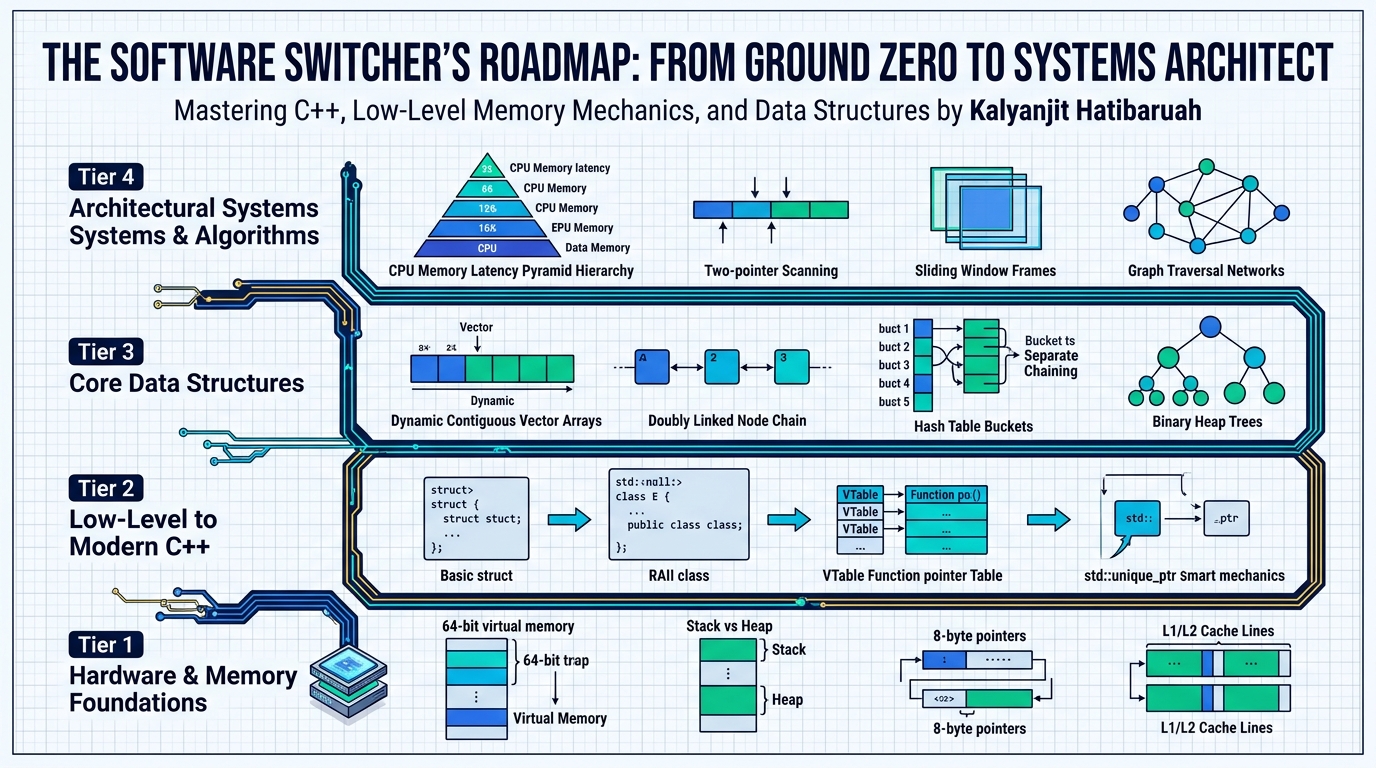
High-level languages like Python, JavaScript, and Java teach you to think in abstractions: APIs, objects, and React state. But what happens when you step into a Tier-1 systems or FinTech interview?
You walk into an interview room at a quantitative trading firm, an autonomous systems group, or an AI infrastructure team, and suddenly you are asked:
In high-level languages, these questions feel like trivia. In systems programming, they are the entire job.
There is a myth that you cannot understand computer architecture without a university CS degree. That myth is false. The human brain learns through spatial, mechanical intuition—visualizing memory as numbered lockers, stack frames as plate dispensers, and pointers as address tracking slips.
Whether you are transitioning from web development, coming from a non-technical field, or leveling up for low-latency interviews.
How this book dismantles the abstract memory wall and turns you into an architect.
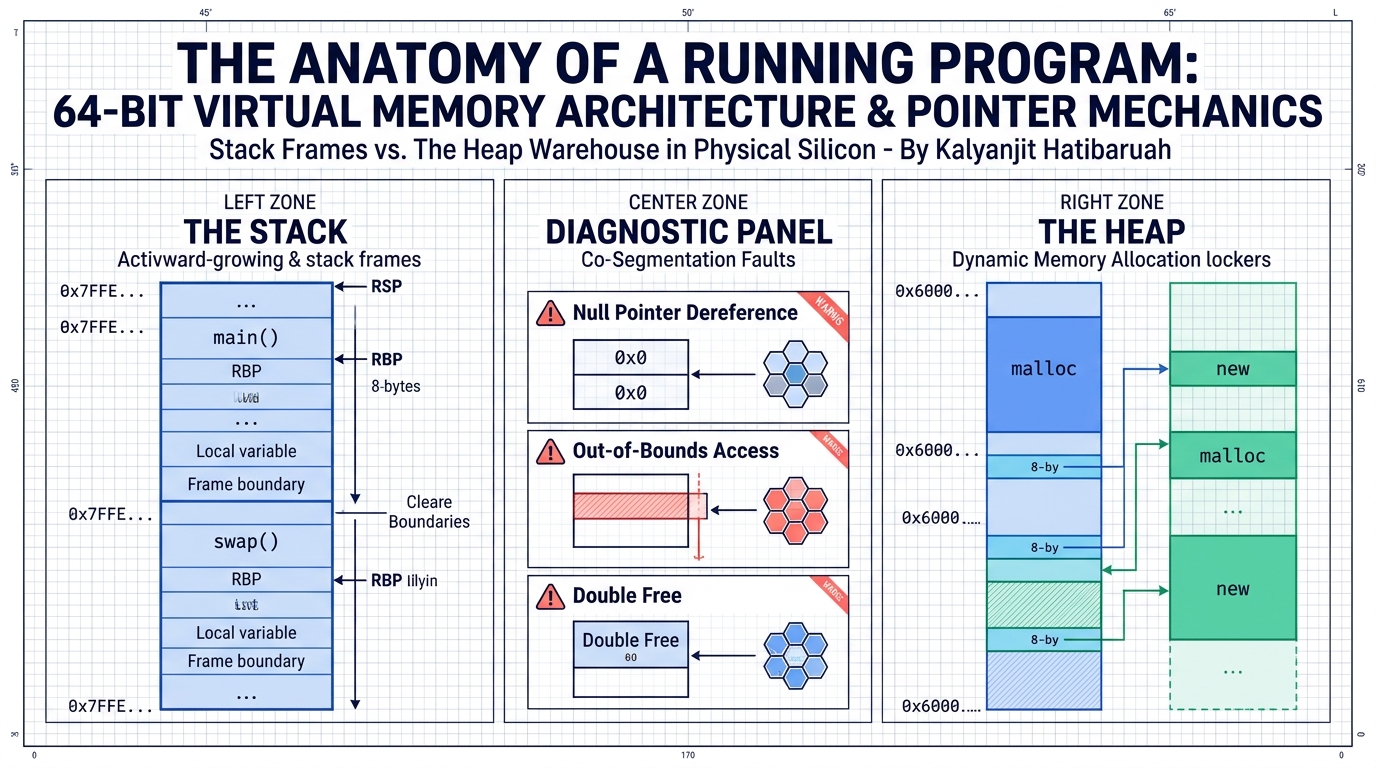
Inspect the exact address space of a running program. Deconstruct stack frames, the heap warehouse, pointer arithmetic, struct alignment, and understand exactly why segfaults occur.
We never hand you high-level library magic without earning the mechanical intuition. Every major container is built twice: first from raw pointers, then refactored into production C++20.
Theoretical computer science assumes uniform memory access. In physical silicon, CPU registers take 0.5ns while RAM takes 80ns. Learn why contiguous arrays dominate linked structures.
Replace abstract textbook questions with working, production-grade portfolio systems you can talk about with authority in high-stakes interviews.
Every single chapter and capstone project features a publication-grade technological architectural infographic.
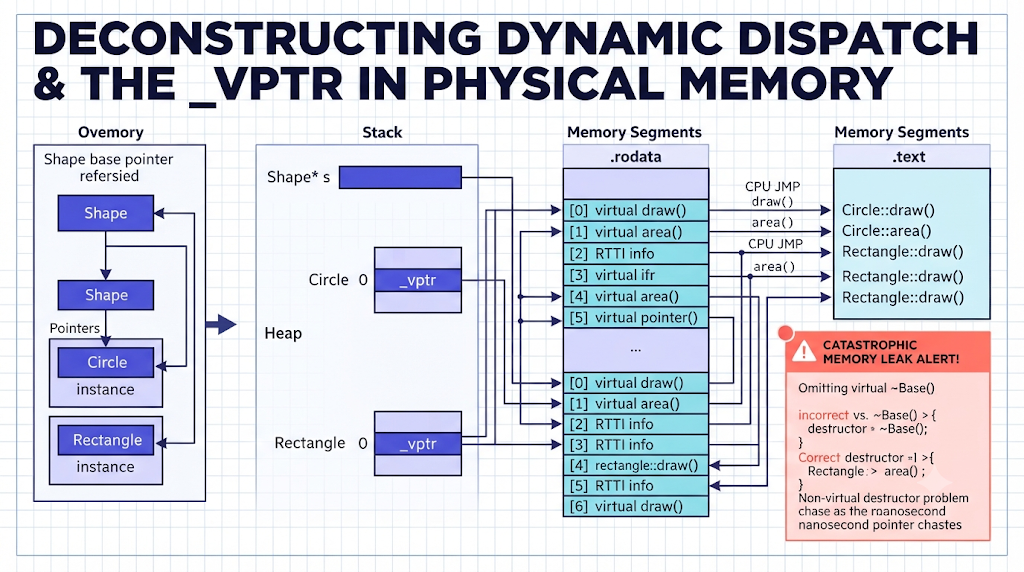
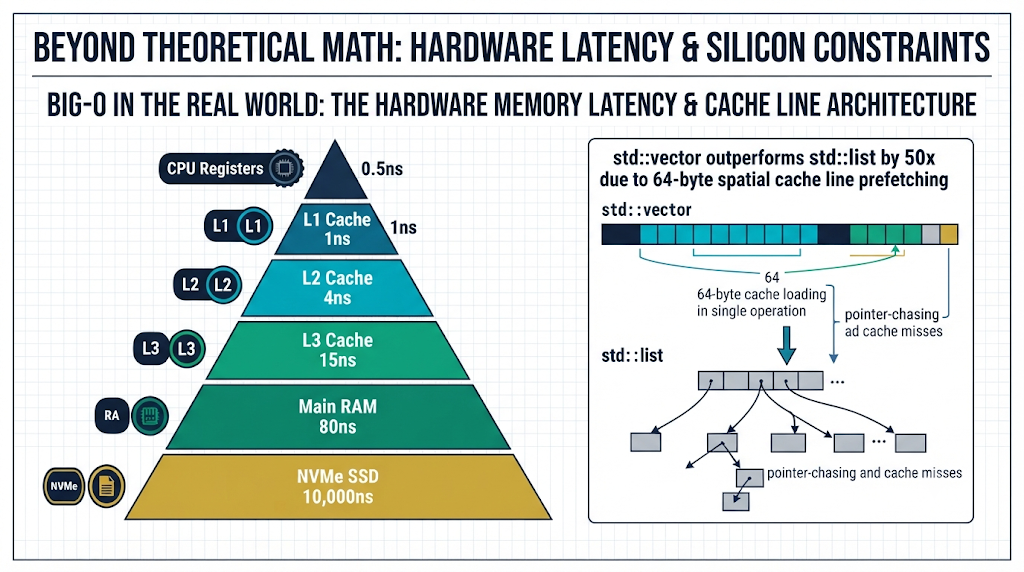
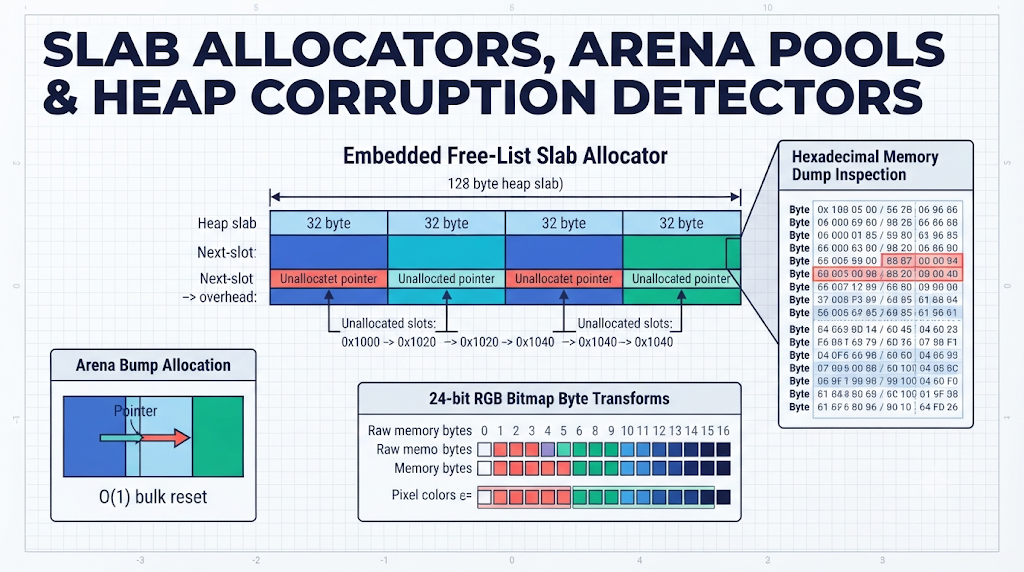
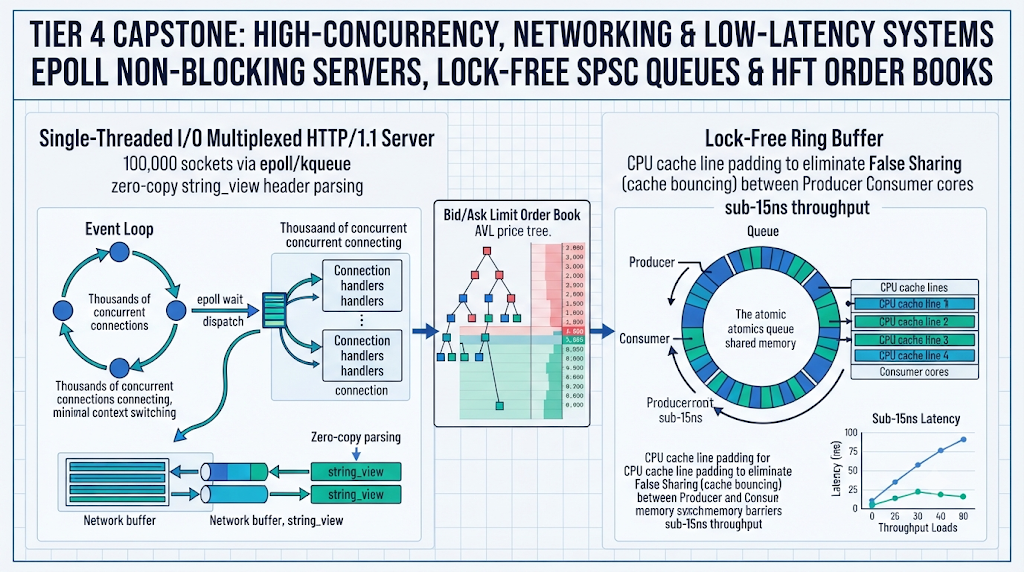
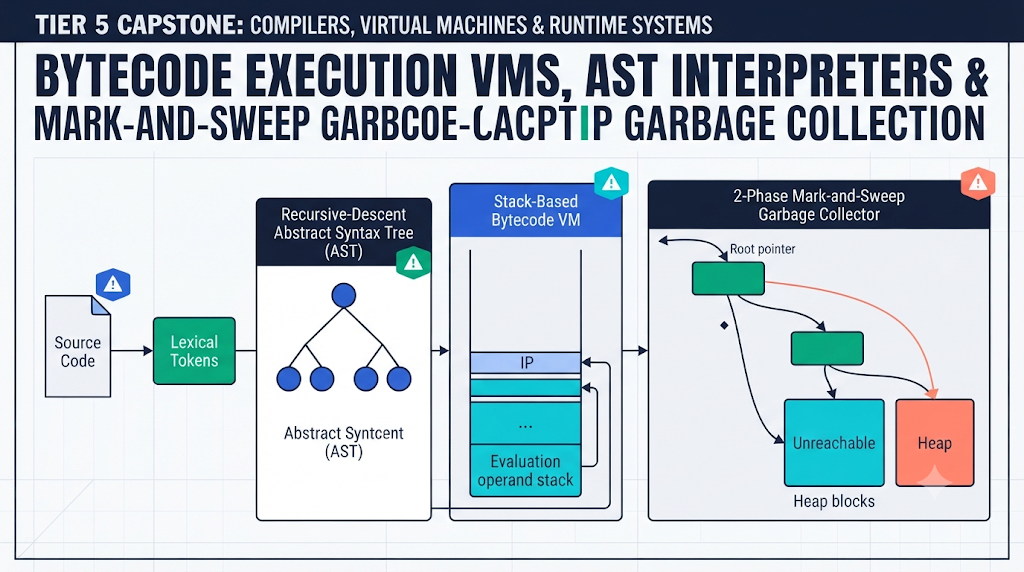
Five specialized engineering tiers that build end-to-end bare-metal competence.
Custom allocators, byte inspectors & bitmap transforms.
Bare-metal data structures with cache alignment.
Columnar storage, SIMD filtering & indexing.
Event-driven I/O, atomics & order matching.
Bytecode virtual machines & memory runtimes.